Why Your Water Changes Tea More Than the Leaves Do
Quick Answer: Tea is roughly ninety-nine percent water, and the minerals, chlorine, and freshness of that water control extraction more than leaf price does. Hard water mutes aroma, dulls colour, and rafts a film across the surface; heavily chlorinated water flattens delicate teas entirely; distilled water strips a brew lifeless in the other direction. The best cup comes from moderately soft, freshly drawn, well-aerated water — and finding out which problem your tap has takes one side-by-side test tonight.
Here is what your water is doing to the leaf, and the cheapest fixes in order.
What is your water actually doing to the leaf?
Running the extraction — and every mineral has an opinion.
Brewing is chemistry between hot water and leaf compounds: catechins and tannins for briskness, amino acids for savour and sweetness, aromatic oils for everything your nose gets. Water is the solvent doing all of that work, and its mineral load changes what dissolves and what binds.
Calcium and magnesium — hardness — are the big actors. In hard water, minerals bind with tea polyphenols to form complexes that mute aroma and flatten flavour, and the visible evidence is the shimmering film on top of a cooling cup: tea scum, formed when calcium, tannins, and air meet. Hard-water tea also brews darker and murkier while somehow tasting duller — colour up, character down.
Chlorine and chloramine are flavour vandals. Municipal disinfection keeps water safe and donates a swimming-pool edge that delicate greens and whites cannot survive. Robust black teas partially mask it; anything subtle simply loses.
Too few minerals fail in the opposite direction. Distilled and zero-mineral waters over-extract harsh notes while carrying none of the mineral structure that gives a brew body — the result tastes hollow and slightly aggressive at once. A little mineral content is a feature; the target is moderate, not zero.
Even dissolved oxygen matters at the margins: water boiled down all afternoon in the kettle pours flat, which is why fresh-drawn water is a rule in every serious tea tradition.
How do you find out which water problem you have?
Read your kettle, then run the two-mug test.
The kettle confesses first. White crusty scale on the element or floor means hard water — the calcium announcing itself. Scale within weeks of descaling means very hard. No scale after months points soft. Much of the American Midwest, Southwest, and Plains runs hard to very hard; the Pacific Northwest and much of New England run soft — but buildings and wells vary, which is why the test below beats the map.
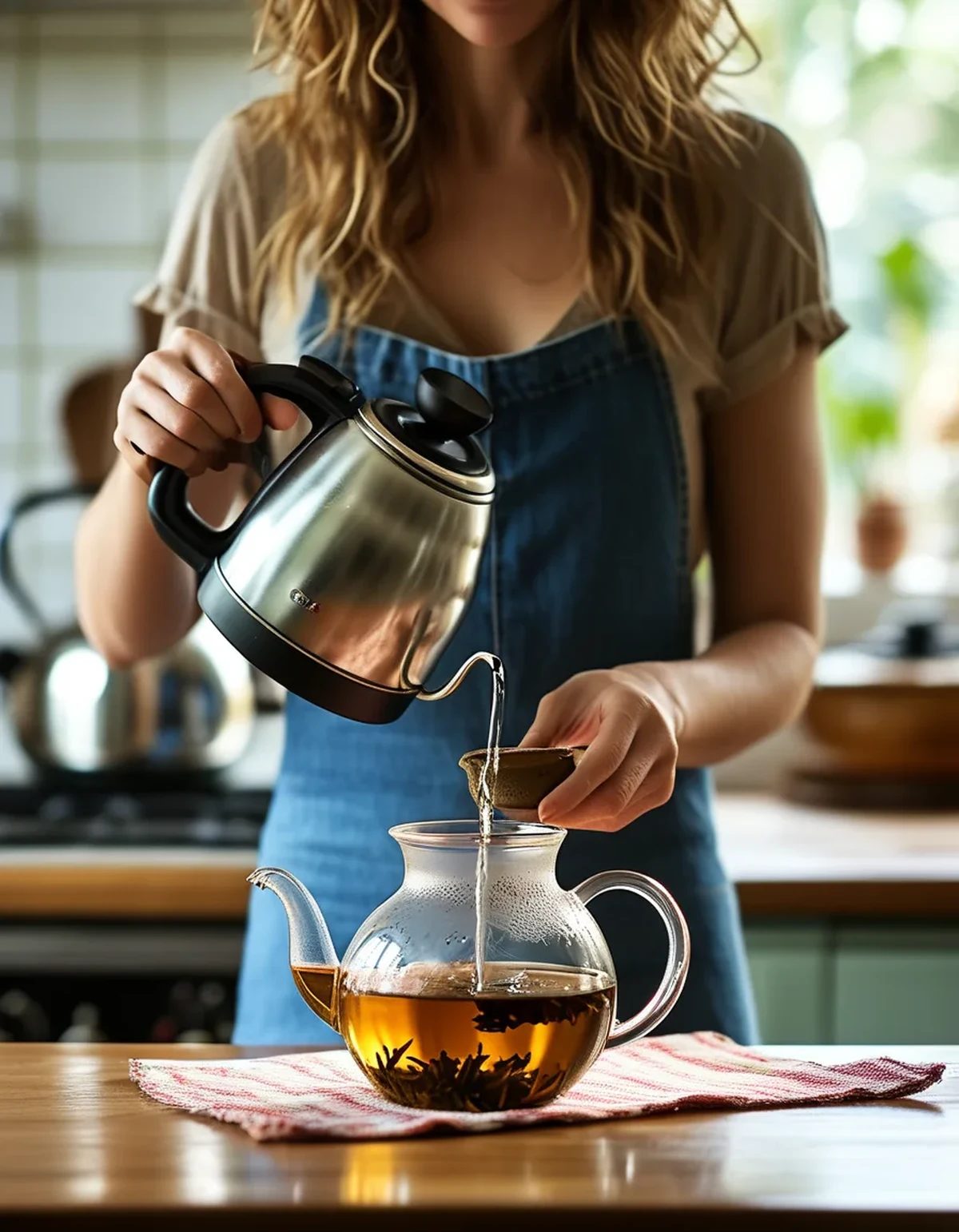
The two-mug test takes ten minutes. Brew the same tea twice, identically — same leaf amount, same temperature, same steep time — once with tap water, once with filtered or a moderately mineralised bottled water. Taste side by side, then let both cool ten minutes and look for the film. If the filtered mug is brighter, more aromatic, and film-free, your tap was the ceiling on every cup you have brewed.
The fixes, cheapest first:
A carbon pitcher filter removes chlorine outright and reduces some hardness — the single biggest upgrade per dollar for most kitchens, and often the whole answer for chlorine-dominant city water.
Letting chlorinated water stand overnight, or boiling with the lid off a minute, dissipates chlorine — free, though chloramine, which many cities now use, largely shrugs it off. The filter handles both.
For very hard water, blending — half tap, half low-mineral bottled — often lands the moderate middle without committing to bottled brewing.
What not to do: brew on pure distilled. You will trade the film for hollowness. If you go bottled, choose low-to-moderate mineral spring water, not zero.
Myth vs Fact: Brewing Water
Myth: Boiling water removes hardness. Fact: Boiling can drop some temporary hardness out of solution — that is partly what the kettle scale is — but most tap hardness survives the boil just fine and ends up in your cup. The kettle is evidence, not a filter.
Myth: Expensive tea fixes bad water. Fact: It amplifies the loss. Delicate, aromatic, expensive leaves are precisely the ones hard or chlorinated water damages most; a robust cheap breakfast blend hides water problems far better. Upgrading water improves every tea you own; upgrading leaves improves only the ones your water permits.
Myth: Re-boiled water ruins tea because the oxygen is gone. Fact: Partially true, mostly misattributed. Re-boiling does flatten dissolved gases, and repeated boiling also concentrates minerals as water steams off — the second effect likely matters more. Fresh-drawn water solves both without needing the debate settled.
Myth: If water is safe to drink, it is fine for tea. Fact: Safety and flavour are different standards. Chlorination that protects you is indifferent to your sencha. Every serious tea culture obsesses over water for a reason that has nothing to do with safety.
Myth: The film on my tea means the tea is bad quality. Fact: Tea scum is a water signature — calcium plus tannins plus air. The same leaf brews film-free in soft water. If your mugs wear a shimmering skin, audit the tap before the tea.
Does water matter for iced and cold brew too?
Yes — and late summer is the season to exploit the one style that forgives everything.
Cold brew is the most water-tolerant method there is. Steeping leaves in cold water for six to twelve hours extracts gently: fewer tannins come out at low temperature, so there is less for hardness to bind, and the chlorine edge reads softer without heat driving aromatics. If your tap is mediocre, cold brew is the style that hides it best — and in the last hot weeks of August it is also simply the correct drink.
Cloudy iced tea, though, is a hard-water tell. The classic clouding when hot-brewed tea chills — caffeine and tannins forming complexes as temperature drops — happens faster and thicker in mineral-heavy water. It is harmless and it looks tired. Fixes: brew slightly weaker for icing, cool gradually before refrigerating, or switch the batch to cold brew, which barely clouds at all.
Ice is water too. Cubes made from harsh tap melt straight into a glass you filtered carefully — the last unguarded door. Filling the ice tray from the pitcher filter closes it, and iced tea made entirely from filtered water tastes noticeably cleaner as the ice melts through the drink rather than into it.
And a seasonal note for the kettle: heavy iced-tea season works a kettle hard, and late August is a sensible moment to descale — vinegar or citric acid, a rinse, done. A clean kettle heats accurately and stops seeding extra minerals into the very cups you just fixed.
The whole subject rewards one evening of attention: run the two-mug test, install the cheap filter if it wins, and every tea you own gets upgraded at once — which no amount spent on leaves can do.
FAQ: Tea Water Questions, Answered
What is the ideal water for tea in one sentence?
Freshly drawn, moderately soft water with low chlorine — enough mineral for body, not enough to bind flavour — heated to the right temperature for the leaf.
Is a basic pitcher filter really enough?
For most city water, yes: carbon filtration removes chlorine and takes the edge off hardness, which covers the two most common flavour problems. Severely hard well water may still want blending with low-mineral bottled water for delicate teas.
Why does my tea taste different at work than at home?
Different building, different water — different hardness, chlorine level, and often an over-boiled communal kettle. Same leaves, different solvent. A small stash of filtered water or a desk filter bottle replicates the home cup surprisingly well.
Does water temperature matter as much as water quality?
They matter together: quality sets what can extract, temperature sets what does. Scalded greens turn bitter in perfect water; perfect temperature cannot rescue chlorinated hard water. Fix quality once with a filter, then manage temperature per tea — the two habits complete each other.
TL;DR:
- Tea is ninety-nine percent water, and hardness, chlorine, and staleness set the ceiling on every cup — the film on cooling tea is your tap signing its work.
- Hard water binds and mutes flavour while brewing darker; chlorine flattens delicate teas; distilled water hollows the cup from the other side. Moderately soft and freshly drawn wins.
- Run the two-mug side-by-side tonight; if filtered wins, a carbon pitcher filter upgrades every tea you own at once.
- Cold brew forgives poor water best and suits late August anyway; filter the ice tray too, and descale the kettle at season’s end.
Same leaf, two mugs, ten minutes. The taste difference will tell you exactly where your tea budget should have been going.
Keep Reading
This article is for general informational purposes only and is not medical advice. Always consult a qualified health professional for guidance specific to you.