Why Bitter-Tasting Tea Is Almost Always a Water Temperature Problem, Not a Tea Quality Problem
A cup of tea that turns out bitter gets blamed on the tea itself far more often than it should, because water that’s too hot for a given tea type extracts bitter compounds disproportionately fast — meaning the exact same tea leaves can taste completely different depending on nothing more than water temperature.
Why Steeping Delicate Teas in Boiling Water Extracts Bitterness Disproportionately
The temperature-extraction mechanism: the boiling-water-extracts-tannins-and-bitter-compounds-much-faster-than-cooler-water-does (the higher heat accelerating the release of compounds responsible for bitterness at a disproportionate rate — the boiling-water-extracts-bitter-compounds-faster), the the-delicate-teas-like-green-and-white-have-compounds-that-turn-bitter-specifically-at-high-temperatures (the certain tea types being especially sensitive to this effect due to their particular compound makeup — the delicate-teas-especially-sensitive-to-heat), the the-heartier-teas-like-black-and-herbal-tolerate-higher-temperatures-without-the-same-bitterness-effect (the different tea types having genuinely different ideal temperature ranges rather than one universal rule — the heartier-teas-tolerate-higher-heat), and the reframe (bitterness reflecting a temperature mismatch for that specific tea type far more often than it reflects poor tea quality)).
The Specific Temperature Ranges Suited to Different Tea Types
The actual guidance: the green-and-white-teas-steep-best-in-water-well-below-boiling-often-around-160-to-185-degrees (the a notably cooler range than most people default to for these delicate types — the green-white-steep-at-160-to-185-degrees), the the-black-and-herbal-teas-tolerate-and-often-benefit-from-water-closer-to-a-full-boil (the a much higher acceptable range for these heartier tea types — the black-herbal-tolerate-near-boiling), the the-oolong-generally-falls-in-a-middle-range-depending-on-how-oxidized-the-specific-oolong-is (the a variable middle ground depending on the specific processing of that oolong — the oolong-falls-in-variable-middle-range), and the frame (roughly 160 to 185 degrees for green and white, near-boiling for black and herbal, and a variable middle range for oolong — specific numbers rather than a single one-size-fits-all boiling approach).
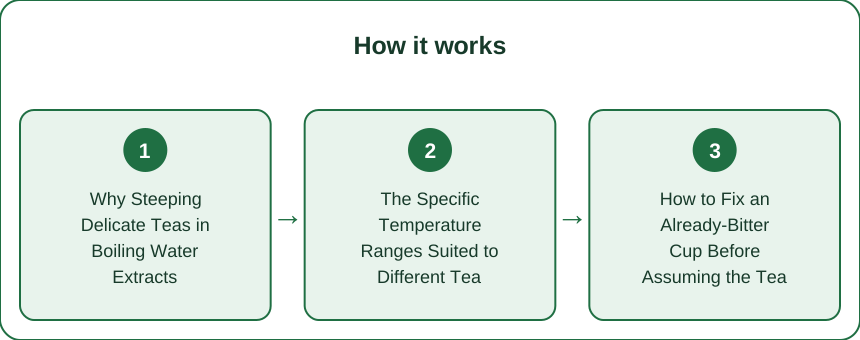
How to Fix an Already-Bitter Cup Before Assuming the Tea Itself Was Bad
The salvage and correction steps: the add-a-small-amount-of-cooler-water-to-dilute-an-already-over-extracted-bitter-cup (the a quick, immediate fix for a cup that’s already been steeped too hot or too long — the dilute-with-cooler-water-immediately), the the-shorten-steeping-time-on-the-next-attempt-rather-than-only-adjusting-temperature (the time and temperature both contributing to extraction, so both are worth adjusting together — the shorten-steep-time-alongside-temperature-fix), the the-let-boiling-water-rest-for-a-measured-few-minutes-before-pouring-over-delicate-tea-if-no-thermometer-is-available (the a practical workaround for reaching the right approximate temperature range without dedicated equipment — the rest-boiling-water-a-few-minutes-without-thermometer), and the frame (diluting an over-extracted cup with cooler water, shortening steep time going forward, and letting boiled water rest a few minutes before pouring over delicate tea if no thermometer is on hand — practical fixes that don’t require new equipment).
A bitter cup of tea gets blamed on the tea itself far more often than it deserves, since water that’s too hot for a given tea type extracts tannins and other bitter compounds at a disproportionate rate, and delicate teas like green and white are especially sensitive to that effect while heartier teas like black and herbal tolerate much higher heat without the same problem. The actual guidance is roughly 160 to 185 degrees for green and white teas, near-boiling water for black and herbal, and a variable middle range for oolong depending on how oxidized that particular oolong is. If a cup already tastes bitter, dilute it immediately with a small amount of cooler water, shorten the steeping time on the next attempt alongside adjusting temperature, and if no thermometer is available, simply let boiled water rest a few minutes before pouring it over delicate tea to land in roughly the right range.
Keep Reading
This article is for general informational purposes only and is not medical advice. Always consult a qualified health professional for guidance specific to you.