Why Some Decaf Teas Taste Nothing Like the Original and Others Barely Change
Quick Answer: Decaf tea’s flavor difference comes down to which decaffeination method was used — the CO2 process best preserves flavor compounds, the Swiss Water process is a close second and chemical-free, while solvent-based methods (using ethyl acetate or methylene chloride) tend to strip out more of the flavor and aromatic compounds along with the caffeine.
A disappointing decaf isn’t necessarily a lower-quality tea to begin with — it’s often just a sign of which decaffeination process was used, since the methods differ significantly in how much flavor they preserve.

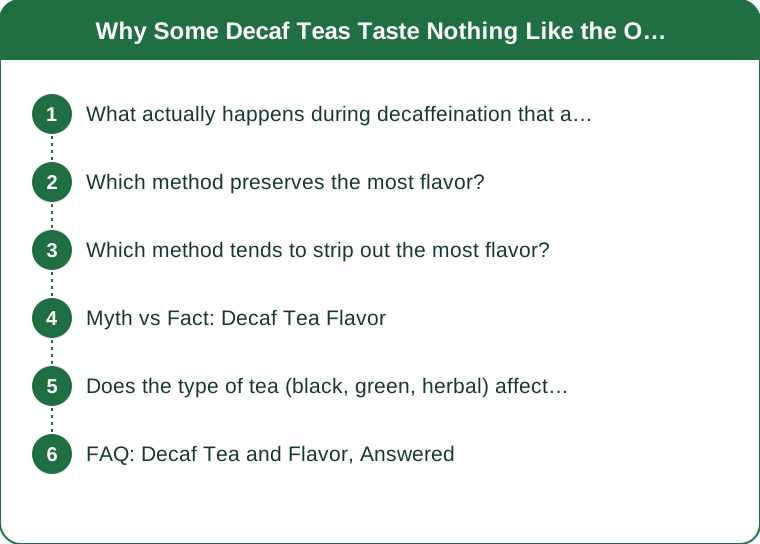
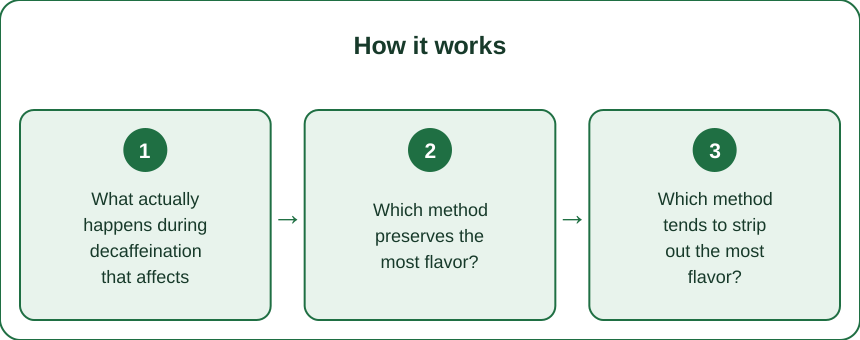
What actually happens during decaffeination that affects flavor?
All decaffeination methods work by using water, a solvent, or pressurized CO2 to extract caffeine from tea leaves — but caffeine molecules are chemically similar enough to some flavor and aromatic compounds that most extraction methods pull out at least some of those compounds along with the caffeine, to varying degrees depending on the method’s selectivity.
Which method preserves the most flavor?
The CO2 (supercritical carbon dioxide) process is widely considered the most flavor-preserving method, since pressurized CO2 is more selective for caffeine molecules specifically and leaves more of the flavor compounds intact than other methods. The Swiss Water process, which uses only water and activated charcoal filtering rather than chemical solvents, is a close second and has the added appeal of being entirely chemical-free.
Which method tends to strip out the most flavor?
Solvent-based methods, using ethyl acetate or methylene chloride to bind with and remove caffeine, are generally the least flavor-preserving, since these solvents are less selective and pull out more of the surrounding compounds along with caffeine. This is often the more budget, mass-market decaffeination method, which partly explains why some inexpensive decaf teas taste noticeably flatter than their caffeinated counterparts.

Myth vs Fact: Decaf Tea Flavor
Myth: “All decaf tea tastes equally muted compared to regular tea.” Fact: the specific decaffeination method matters enormously — a CO2 or Swiss Water decaf can taste remarkably close to the original, while a solvent-processed one often tastes noticeably flatter.
Myth: “Decaf tea has zero caffeine.” Fact: most decaf teas retain a small amount of residual caffeine (typically a small fraction of the original content), not zero — worth noting for anyone avoiding caffeine strictly.
Myth: “You can tell the decaffeination method just by tasting it.” Fact: while flavor differences are real, they’re not always reliably distinguishable by method alone without checking the packaging — brand and tea quality also affect final flavor.
Does the type of tea (black, green, herbal) affect how noticeable the decaf flavor difference is?
Yes — more delicate teas show the difference more obviously. Green and white teas, which rely on subtler aromatic compounds for their flavor profile, tend to show decaffeination’s flavor impact more noticeably than black tea, which has a bolder, more robust flavor profile from oxidation that’s less easily disrupted by the extraction process.
FAQ: Decaf Tea and Flavor, Answered
How can I tell which decaffeination method a specific tea used?
Check the packaging or brand website — reputable tea companies, especially those emphasizing quality, often specify the method directly, since it’s a genuine selling point for CO2 or Swiss Water processed teas.
Is CO2-processed decaf tea more expensive than solvent-processed?
Generally yes, somewhat — CO2 processing is a more specialized and costly method, which is often reflected in the final product price compared to mass-market solvent-processed decaf.
Does herbal tea need decaffeination at all?
Most herbal teas (not made from the actual tea plant) are naturally caffeine-free already — decaffeination specifically applies to teas made from Camellia sinensis (black, green, white, oolong), not herbal infusions.
TL;DR:
- Decaf flavor differences come down to which decaffeination method was used, not tea quality alone
- CO2 and Swiss Water processing preserve flavor best; solvent-based methods strip out more
- Green and white teas show the flavor impact more noticeably than bolder black tea
- Checking packaging for the specific decaffeination method predicts flavor quality better than price alone
A flat-tasting decaf isn’t a dead end — switching to a CO2 or Swiss Water processed tea often closes most of the flavor gap.
Keep Reading
This article is for general informational purposes only and is not medical advice. Always consult a qualified health professional for guidance specific to you.