What the String and Tag on a Tea Bag Actually Tell You About Quality
Quick Answer: A stapled tag versus a heat-sealed string, a pyramid-shaped bag versus a flat one, and whether the string is cotton versus a synthetic blend are small details that reliably correlate with leaf quality and steeping performance — more so than most box-front marketing claims.
You’ve probably thrown out hundreds of tea bag tags without a second glance. A handful of small details on that string and tag actually predict a lot about what’s in the bag.

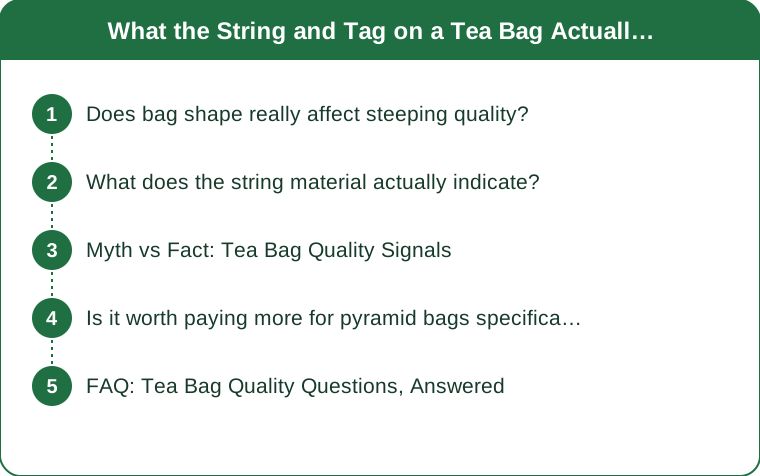
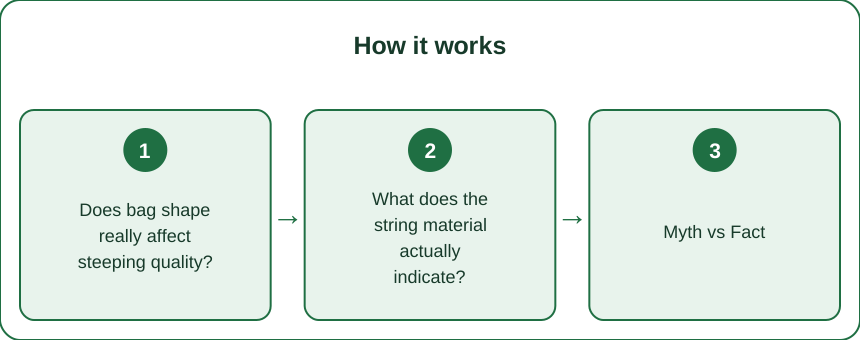
Does bag shape really affect steeping quality?
Yes, meaningfully. Pyramid or sachet-style bags give leaves room to expand and circulate water fully, closer to loose-leaf steeping. Flat, tightly packed bags compress leaves into less space, restricting water flow and often producing a flatter, more one-dimensional cup regardless of leaf quality inside.
This is one of the most reliable visual cues before you’ve even opened the box.
What does the string material actually indicate?
Cotton or unbleached string is more common among brands prioritizing quality and avoiding synthetic material near hot water. A stapled metal tag is a minor but real quality flag for some drinkers, since staples were historically associated with lower-cost mass production, though this correlation has weakened somewhat as more brands use heat-sealed strings across price points.
Neither detail alone determines quality, but together with bag shape they form a reasonably reliable pattern.

Myth vs Fact: Tea Bag Quality Signals
Myth: All tea bags contain lower-quality leaf fragments (dust and fannings) regardless of price. Fact: Pyramid bags from quality-focused brands increasingly use whole or large-leaf pieces, not just dust — bag shape often signals which category you’re getting.
Myth: A fancy-looking tag always means better tea inside. Fact: Tag design is marketing, not a reliable quality signal on its own — it should be read alongside bag shape and material, not instead of them.
Myth: Loose leaf is always better than any bagged tea. Fact: High-quality pyramid bags with whole leaf can rival loose leaf; the meaningful gap is between flat dust-filled bags and everything else, not bagged versus loose as a blanket rule.
Is it worth paying more for pyramid bags specifically?
For most black, green, and oolong teas, yes — the leaf expansion room measurably improves flavor extraction compared to flat bags at a similar price point. For herbal infusions and finely ground matcha-style products, the difference matters less, since those don’t rely on whole-leaf expansion the same way.
FAQ: Tea Bag Quality Questions, Answered
Can I tell tea bag quality just by looking at the box, without opening it?
Bag shape is often visible through packaging or described on the box — pyramid or sachet shape is the single most useful clue available before opening.
Does a compostable tag and string mean the tea itself is higher quality?
Not directly — that’s an environmental choice, though brands making that investment often also invest more in leaf quality, so it’s a loose but real correlation.
Is it worth switching from flat bags to pyramid bags for everyday tea?
For daily black or green tea drinkers who care about flavor, yes — it’s one of the more noticeable upgrades available without switching to loose leaf entirely.
TL;DR:
- Pyramid or sachet-shaped bags allow better leaf expansion and flavor extraction than flat bags
- Cotton string and heat-sealed construction loosely correlate with quality-focused brands
- Bag shape is a more reliable quality signal than tag design or box marketing
- Pyramid bags matter most for black, green, and oolong teas specifically
Next time you’re deciding between two boxes, skip the marketing copy and check the bag shape through the package — it tells you more.
Keep Reading
This article is for general informational purposes only and is not medical advice. Always consult a qualified health professional for guidance specific to you.