Why Matcha Hits Different Than Green Tea, Even Though They're the Same Plant
Quick Answer: Matcha contains significantly more caffeine than steeped green tea because you consume the whole ground leaf rather than just what dissolves into water — roughly 70mg per serving versus 30-50mg for a typical cup of steeped green tea.
Both come from the same Camellia sinensis plant, yet matcha feels noticeably more energizing than a cup of green tea. The difference comes down to how much of the actual leaf you’re consuming.

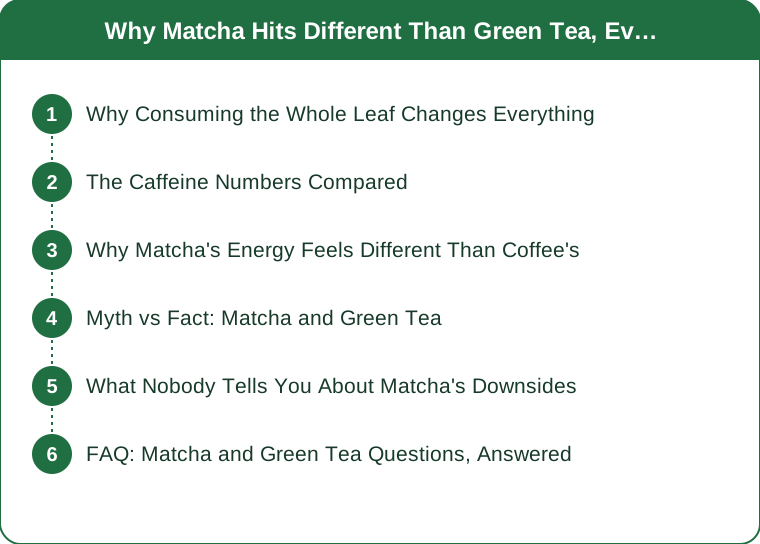
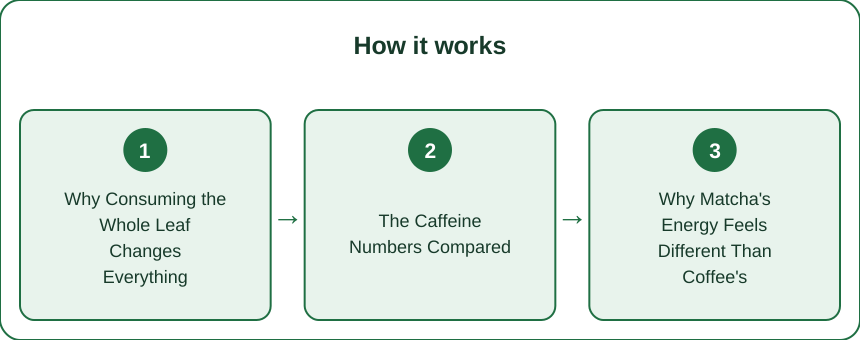
Why Consuming the Whole Leaf Changes Everything
Steeped green tea involves infusing leaves in hot water and discarding them, meaning only the compounds that leach out during steeping end up in your cup. Matcha is stone-ground whole tea leaves whisked directly into water, so you’re consuming 100% of the leaf’s caffeine and nutrients, not just what dissolved out over a few minutes.
The Caffeine Numbers Compared
A typical serving of matcha (about 1 teaspoon of powder) contains roughly 70mg of caffeine, compared to 30-50mg in a standard cup of steeped green tea. That puts matcha closer to a light coffee in caffeine content, while green tea sits closer to the low end of black tea.
Why Matcha’s Energy Feels Different Than Coffee’s
Matcha also contains a relatively high concentration of L-theanine, an amino acid that promotes calm alertness and moderates the jittery edge often associated with caffeine alone. This combination is frequently described as a smoother, more sustained energy compared to coffee’s sharper spike and crash.

Myth vs Fact: Matcha and Green Tea
Myth: Matcha and green tea have basically the same nutrition since they’re the same plant. Fact: because you consume the whole leaf, matcha delivers meaningfully more antioxidants (particularly EGCG) per serving than steeped green tea. Myth: All matcha is equally potent. Fact: ceremonial-grade matcha typically has a milder, less bitter flavor and slightly different nutrient profile than culinary-grade matcha, which is more commonly used in lattes and baking.
What Nobody Tells You About Matcha’s Downsides
Because you’re consuming the whole leaf, matcha also concentrates any contaminants (like lead, which tea plants can absorb from soil) more than steeped tea does — sourcing from reputable, tested brands matters more for matcha than for steeped green tea for this reason.
FAQ: Matcha and Green Tea Questions, Answered
Is matcha healthier than regular green tea?
Matcha offers more concentrated antioxidants and caffeine per serving, but regular green tea is still a genuinely healthy choice with less caffeine sensitivity risk for most people.
Can I substitute matcha for coffee entirely?
Many people successfully do, especially valuing the steadier energy from L-theanine, though the caffeine content is still meaningfully lower than a standard cup of coffee (95mg average).
How much matcha per day is considered safe?
Most guidance suggests 1-2 servings (1-2 teaspoons of powder) per day is a reasonable amount for most healthy adults, similar to general caffeine moderation guidelines.
TL;DR:
- Matcha delivers the whole ground leaf, while steeped tea only offers what dissolves out
- Matcha has roughly 70mg caffeine per serving versus 30-50mg for steeped green tea
- L-theanine in matcha smooths out the caffeine effect compared to coffee
- Source matcha from reputable brands due to whole-leaf contaminant concentration
Same plant, very different delivery method — and that difference explains nearly the entire gap in how the two drinks actually feel.
Keep Reading
This article is for general informational purposes only and is not medical advice. Always consult a qualified health professional for guidance specific to you.