Loose Leaf vs Tea Bags: Is the Quality Difference Actually Worth It?
Quick Answer: The real difference isn’t loose versus bagged, it’s leaf particle size — standard tea bags typically use ‘fannings’ or ‘dust’ grade tea (broken leaf fragments) that infuse faster but lose aromatic complexity quicker, while loose leaf and premium pyramid bags use whole or large-leaf grades that hold flavor and aroma longer. Quality pyramid-style bags with whole leaf tea can match loose leaf quality closely — it’s the leaf grade, not the bag format itself, that matters most.
The loose-leaf-is-always-better claim isn’t quite accurate — it’s usually true because of what typically ends up in each format, not because of the format itself.

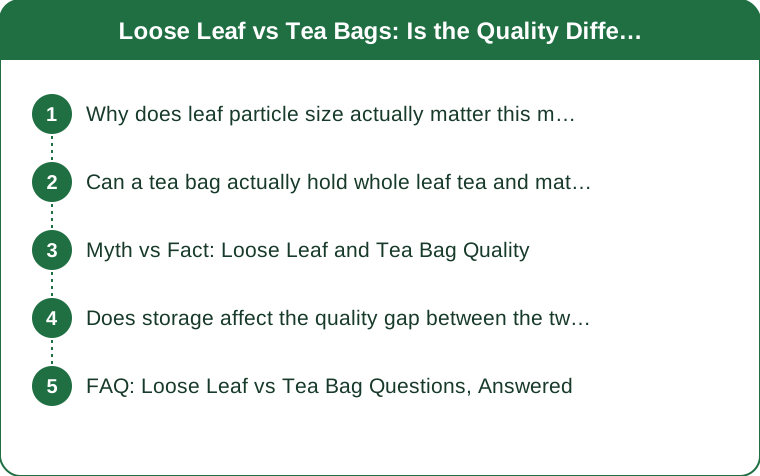
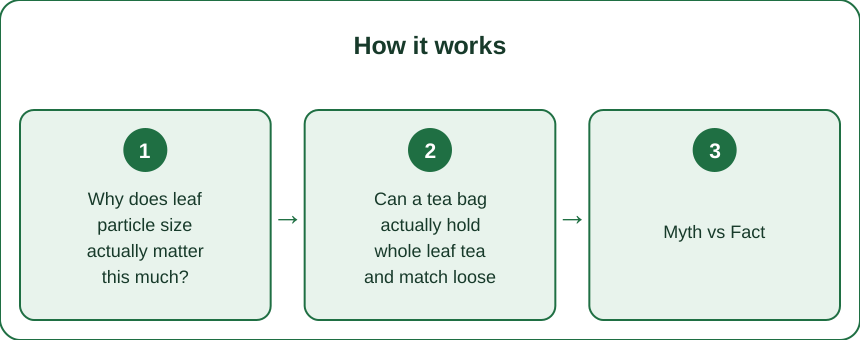
Why does leaf particle size actually matter this much?
Larger, more intact tea leaf pieces retain more of their essential oils and aromatic compounds for longer, since a smaller surface-area-to-volume ratio in whole or large-leaf pieces slows the rate at which those compounds oxidize and evaporate compared to finely broken fragments. This is a genuine chemistry difference, not a subjective quality judgment.
Fannings and dust grade (common in standard cheap tea bags) have a much higher surface area relative to their size, which lets them infuse quickly — useful for a fast, strong cup — but also means they lose their more delicate aromatic notes faster in storage, and extract a flatter, sometimes more bitter flavor profile during steeping.
Can a tea bag actually hold whole leaf tea and match loose leaf quality?
Yes — pyramid-shaped or larger mesh tea bags are specifically designed to hold whole or large-leaf tea grades with enough internal space for the leaves to properly unfurl and expand during steeping, unlike traditional flat paper bags which are too small and tightly packed for whole leaves to expand and release flavor properly.
This is why some premium tea brands’ pyramid bags taste noticeably closer to loose leaf than a standard supermarket tea bag does — the format itself isn’t the limiting factor, the leaf grade and available expansion space inside it are.

Myth vs Fact: Loose Leaf and Tea Bag Quality
Myth: All tea bags use lower quality tea than loose leaf. Fact: Standard cheap flat bags typically do use fannings/dust grade, but premium pyramid bags increasingly use the same whole-leaf grades sold as loose leaf — bag format and leaf grade are separate variables.
Myth: Loose leaf tea always tastes stronger. Fact: Strength depends on steeping time, leaf amount, and water temperature more than format — fannings actually infuse faster and can produce a stronger-tasting cup quickly, just with less nuanced flavor.
Myth: You need special equipment to brew loose leaf properly. Fact: A basic infuser ball or strainer is sufficient — the equipment barrier to trying loose leaf is much lower than the ritual-heavy marketing around it suggests.
Does storage affect the quality gap between the two formats over time?
Yes, meaningfully — fannings/dust grade tea in standard bags loses freshness noticeably faster than whole leaf tea once opened, due to that higher surface area accelerating oxidation, meaning a box of cheap tea bags sitting open for months has likely degraded more than the same elapsed time would affect a sealed container of whole leaf tea.
This is a practical reason to buy standard tea bags in smaller quantities you’ll use relatively soon, while loose leaf or premium pyramid bags have more forgiving storage life if kept in a sealed, dark container.
FAQ: Loose Leaf vs Tea Bag Questions, Answered
Is loose leaf tea always more expensive than tea bags?
Not necessarily per cup — loose leaf is often sold by weight and can be steeped multiple times (a second steep is common for many teas), which sometimes makes the actual per-cup cost comparable to or lower than disposable bags of similar quality.
How can I tell if a tea bag contains fannings or whole leaf without opening it?
Check the bag shape (pyramid or larger mesh bags are a reasonable indicator of whole leaf) and, when available, the packaging description — terms like ‘whole leaf’ or ‘large leaf grade’ are meaningful, while bags without any leaf grade information are more likely standard fannings.
Does the quality difference matter equally for all tea types?
It matters most for teas prized for aromatic complexity (high-quality green, oolong, white teas) and less for teas often drunk strong with milk or sweetener (some black tea blends, chai), where the finer grade’s faster, stronger extraction is sometimes actually preferred.
TL;DR:
- The real quality driver is leaf particle size (whole leaf vs fannings/dust), not bag versus loose format
- Pyramid or larger mesh bags can hold whole leaf tea and approach loose leaf quality
- Fannings infuse faster and stronger but lose aromatic nuance quicker in storage
- Check for ‘whole leaf’ labeling or pyramid shape rather than assuming all bags are equal
Skip the loose-leaf-versus-bags framing entirely and check the leaf grade instead — that’s the variable actually driving the quality difference people notice.
Keep Reading
This article is for general informational purposes only and is not medical advice. Always consult a qualified health professional for guidance specific to you.